
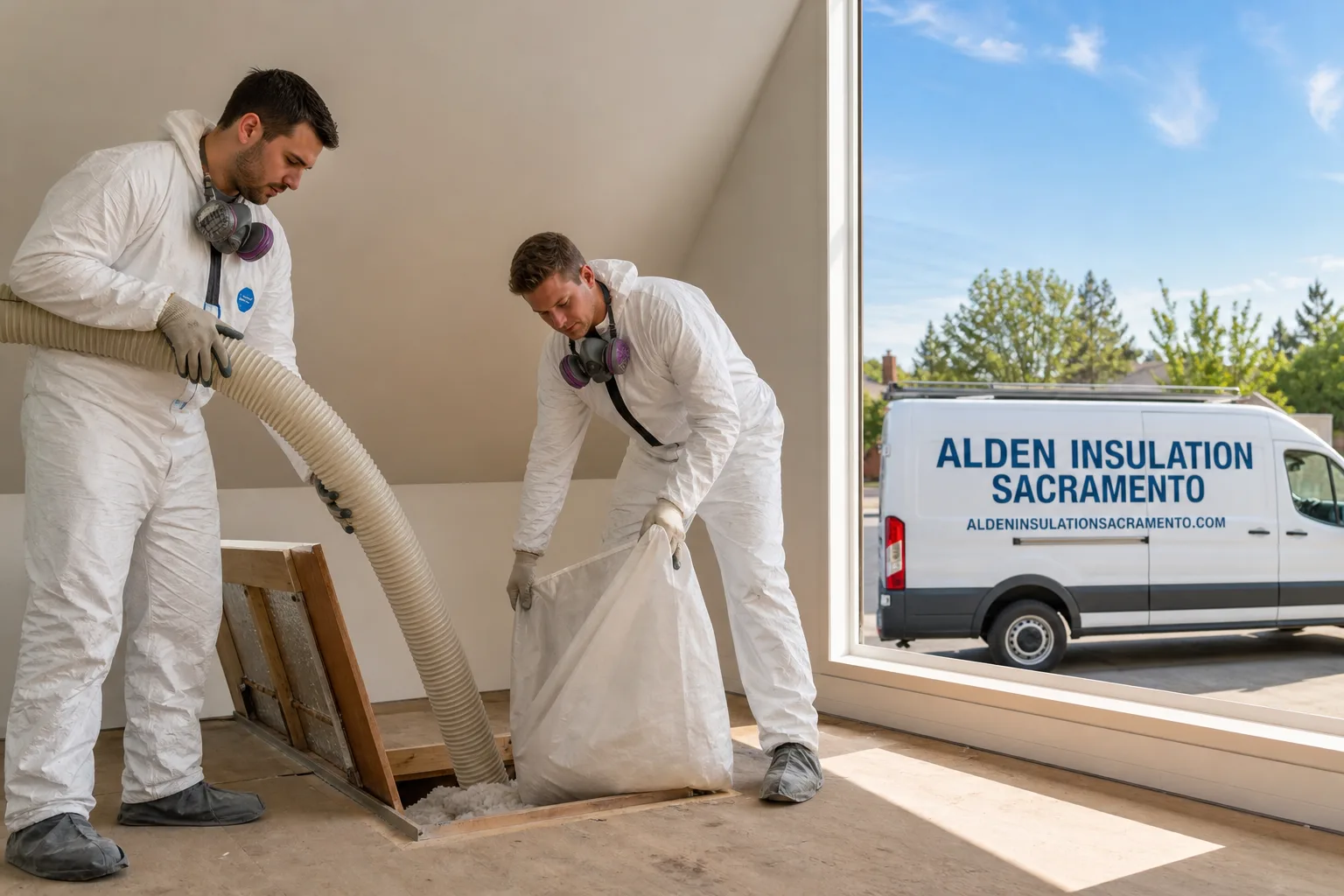
How Much Does Wall Insulation Cost in Sacramento?
Wall insulation in Sacramento typically runs $1.50 to $4.50 per square foot installed, with most complete exterior wall retrofit projects landing between $2,800 and $7,200 for an average 1,600-square-foot single-story home. Blown-in cellulose and fiberglass sit at the lower end of that range, while closed-cell spray foam commands the higher end. The final number depends on access method (drill-and-fill versus open stud bays), existing R-value, and whether you’re insulating all four walls or a single addition.
Here’s the short version: if your walls are already open during a remodel, you’ll pay less. If we’re drilling through drywall or stucco to blow insulation into closed cavities, plan for more labor and a modest patch-and-paint touch-up at the end.
Wall Insulation Cost Breakdown (2026)
These figures reflect what we see across Sacramento County in 2026, from Land Park bungalows to newer Elk Grove builds. They assume a licensed, insured crew doing the work to code. Labor runs 55-65% of every job. Material is the rest.
| Insulation Type | Cost per Sq Ft (Installed) | Best For | R-Value per Inch |
|---|---|---|---|
| Blown-in fiberglass (drill-and-fill) | $1.50 – $2.75 | Finished walls, retrofit, budget-driven | R-2.2 – R-2.7 |
| Blown-in cellulose (drill-and-fill) | $1.75 – $3.25 | Finished walls, sound control, older homes | R-3.2 – R-3.8 |
| Fiberglass batts (open stud bays) | $1.20 – $2.50 | Remodels, new construction, unfinished walls | R-3.1 – R-3.4 |
| Rockwool batts (open stud bays) | $2.50 – $4.00 | Fire resistance, soundproofing, durability | R-4.0 – R-4.2 |
| Open-cell spray foam | $2.00 – $3.75 | Open walls, sealing air gaps, vaulted ceilings | R-3.5 – R-3.7 |
| Closed-cell spray foam | $3.50 – $6.50 | High R-value per inch, moisture barrier, tight spaces | R-6.0 – R-7.0 |
A few things move these numbers. Access is the big one. If your house has brick veneer or stucco over lathe, drilling clean holes takes longer and patch work is more involved than drywall. Crawl space or slab foundation access dictates whether we work from inside, outside, or both. And if the wall cavities contain old, settling insulation from the 1970s, removal adds $1 to $2 per square foot before we even start installing.
Sacramento is SMUD and PG&E territory, and both utilities run periodic rebate programs for insulation upgrades. Those rebates have tight eligibility windows and paperwork requirements, so checking current programs before you commit is worth the phone call.
What Affects Wall Insulation Pricing in Sacramento
- Access method and wall condition. Open stud bays during a remodel are the cheapest install. Drill-and-fill retrofits run higher because of the hole-cutting, plugging, and patch labor involved. If your walls show signs of old termite damage or dry rot, repairs happen before insulation goes in.
- R-value targets for this climate. Sacramento sits in climate zone 3, which calls for R-13 to R-15 in exterior walls. Going higher than code, say R-21, means a different material or a hybrid approach, and the price moves accordingly.
- Insulation type. Cellulose and fiberglass cost less than spray foam. Rockwool sits in the middle and earns its price through fire resistance and sound damping, which matters in neighborhoods like Tahoe Park where houses sit close to rail lines or busy corridors.
- Home age and construction style. A 1920s Craftsman in Curtis Park with plaster walls and balloon framing takes more care than a 2005 tract home in Natomas with standard 2×4 construction. Older homes often have uneven stud spacing and hidden blocking that slows a drill-and-fill crew down.
- Square footage of wall surface. This is not the same as floor square footage. A 1,600-square-foot home can have 1,800 to 2,400 square feet of wall surface depending on ceiling height and layout. We measure wall area, not floor area.
- Air sealing scope. Insulation without air sealing is a job half done in Sacramento’s summer heat. Sealing top plates, outlet boxes, and penetrations before blowing insulation adds $0.50 to $1.50 per square foot but can cut energy loss in half during triple-digit July days.
Signs Your Sacramento Home Needs Wall Insulation
Most homeowners notice the symptoms before they think about the walls. Rooms stay hot when the AC runs. Heating bills climb through January even with the thermostat set low. Outside noise carries into the house, especially on streets like Broadway or Franklin Boulevard where traffic never quite stops.
The most direct test: on a summer afternoon, put the back of your hand against an interior wall that faces the sun. If it feels warm to the touch, your wall cavities are doing little to slow heat transfer. That’s what missing or settled insulation feels like from the inside.
Homes built before 1980 across Midtown, Oak Park, and Land Park often have either no wall insulation or a thin layer that has slumped to the bottom third of each cavity over 40-plus years. Many of those homes were built with R-7 or R-11 at best. Current code expects R-13 to R-15 minimum, and the difference in summer comfort is measurable.
How to Save on Wall Insulation
The biggest savings come from acting during a remodel instead of a retrofit. If drywall is already coming down for a kitchen or bathroom project, the marginal cost of adding batts or spray foam to those open bays drops sharply, because the access labor is already paid for.
Second, check utility rebates before you sign anything. SMUD and PG&E have both run insulation programs in recent years, and the Sacramento Municipal Utility District territory covers much of the city, while PG&E handles many of the surrounding suburbs. These programs sometimes offset 10-25% of a qualifying install. They don’t advertise heavily, so ask.
Third, don’t over-insulate past what the climate requires. R-60 in Sacramento walls is wasted money. Climate zone 3 homes need R-13 to R-15 in the walls and more in the attic, where heat actually escapes. Matching the application to the climate is where honest savings live.
The best first move is a free estimate with a written price, which is the only way Alden Attic Insulation starts a job. Call (279) 205-7041 and we’ll measure, inspect, and put a number in your hand before any tool comes off the truck.
Wall Insulation Materials We Install in Sacramento
Alden Attic Insulation works with eight brands: Owens Corning, Johns Manville, Knauf, Rockwool, CertainTeed, Icynene, Demilec, and GreenFiber. We name them because homeowners should be able to look up the product before they approve it, not guess what went into their walls.
For most Sacramento retrofits, blown-in cellulose from GreenFiber or blown-in fiberglass from Owens Corning and Johns Manville deliver the best price-to-performance ratio in closed wall cavities. Cellulose is denser and handles sound better, which matters in older neighborhoods with plaster walls. Fiberglass is lighter, cheaper per square foot, and works fine in standard 2×4 framing.
For open stud bays, Rockwool batts carry a real advantage: they don’t burn, they don’t slouch, and they cut outside noise noticeably. We install more Rockwool in Sacramento than most companies because it holds its shape in a city where summer attic temperatures routinely exceed 140 degrees.
Spray foam from Icynene and Demilec costs more but earns it in specific situations. Closed-cell foam is the only realistic choice for shallow 2×4 walls where homeowners want R-20 or higher without furring out the studs. Open-cell foam is our standard recommendation for rim joists and odd transitions where traditional batts leave gaps. Since 2002, the Garrison Partners family has held every crew to The Garrison Standard, which means the material we quote is the material that goes in, named on the written proposal.
Blown-In vs Batts vs Spray Foam: What’s Right for Your Sacramento Home
The choice comes down to three questions: Are your walls open? What’s your R-value target? And what comfort problem are you actually solving?
Blown-in insulation wins for retrofits. We drill 2-inch holes through drywall, stucco, or siding, blow the material to a measured density, then plug and patch. It fills wall cavities completely, gets into odd framing angles, and costs less than spray foam. The downside: the holes need patching, which leaves visible repair spots unless you repaint.
Batts make sense when walls are already open, or in unfinished spaces like garages and additions. They’re the cheapest material, easy to inspect, and a competent crew installs them quickly. They only fail when sloppy installers leave gaps around outlets and framing, which is exactly what air sealing and a careful install prevent.
Spray foam is the premium option. It insulates and air seals in one step, expands to fill irregular cavities, and closed-cell foam adds structural rigidity. It costs more, sometimes twice as much as blown-in fiberglass. For most Sacramento homes, the right answer is spray foam for rim joists and problem areas, blown-in for finished walls, and batts for open bays.
Alden Attic Insulation installs all three. Our technicians are background-checked and uniformed, answer questions directly, and follow The Garrison Code on every site: written price first, written guarantee for 365 days, no exceptions.
How the Installation Process Works
Here’s what a retrofit looks like from start to finish, so there are no surprises when the crew arrives.
- The estimate. We measure wall surface area, inspect the existing insulation, check access points, and hand you a written price. That number includes material, labor, patching, and cleanup. No line items appear later.
- Prep and air sealing. On install day, the crew moves furniture away from work areas, covers floors with drop cloths, and seals penetrations like outlet boxes, wire runs, and top plates with foam or caulk.
- Drilling. Holes go in from inside or outside, depending on siding type and furniture layout. Stucco homes typically get drilled from the inside to preserve the exterior finish; drywall interiors get patched by our crew.
- Blowing. Material is installed to a target density, not a guess. A hose-pressure gauge verifies each cavity is filled correctly, and a thermal check confirms coverage before we move to the next wall.
- Patching and cleanup. Holes are plugged, mudded, and sanded. We leave the job site broom-clean. The patch is ready for paint when we leave; we don’t paint, so you’ll want a painting estimate if the wall isn’t being fully refinished.
- The guarantee. Every Alden Attic Insulation job includes the 365-Day Done Right Promise. If the insulation settles, fails, or doesn’t perform within a year, we return at no charge. That’s in writing.
Most single-story Sacramento homes are completed in one day. Two-story homes or stucco exteriors can take two days depending on wall access.
Wall Insulation vs Attic Insulation: Where Should Sacramento Homeowners Spend First?
If you’re working with a limited budget, insulate the attic before the walls. Heat rises, and in Sacramento’s summer, your attic can hit 140 degrees while living spaces roast below. Attic insulation is cheaper per square foot, easier to install, and returns savings faster than wall work in most homes.
Wall insulation matters, but it’s the second priority. A well-insulated attic with R-38 or R-49 keeps the whole house cooler and cuts AC load dramatically. Walls handle radiant heat from the sun and help with sound; they’re the finishing piece in a complete thermal envelope.
That said, if your attic was done years ago and your walls are empty, walls are the next logical step. Homes in Natomas, Folsom, and Roseville built in the 1980s and 1990s often have attic insulation but nothing in the walls. Upgrading those empty cavities makes an immediate difference in room-by-room comfort. For a full assessment, see our Wall Insulation in Sacramento guide.
Rebates and Incentives for Sacramento Insulation in 2026
As of 2026, SMUD offers periodic home-efficiency rebates that can include insulation. PG&E, which serves surrounding areas in the county, runs similar programs. The eligibility rules change by season and by funding cycle, so the only way to know what’s current is to check before you buy.
Federal tax credits under the Inflation Reduction Act’s energy-efficiency provisions may also apply to insulation upgrades. The credit typically covers a percentage of the material cost, not labor. Your tax professional can confirm what your household qualifies for.
What Alden Attic Insulation will not do is fold a “rebate estimate” into your price and then hope the program still exists when the job is done. Rebates are yours to claim. We provide the itemized invoice and product documentation you need to file.
Sacramento-Specific Notes on Wall Insulation
Sacramento’s climate zone is the controlling factor for every insulation decision here. The city endures 100-degree summer days, cold winter nights, and dry air most of the year. Humidity is low compared to the Gulf Coast, which means vapor barrier placement works differently here than it does in humid climates.
Winter in Sacramento means weeks of morning fog and nighttime temperatures in the 30s. A well-insulated wall holds interior heat longer and reduces the load on furnaces and heat pumps. Summer, though, is when wall insulation earns its keep: when the afternoon sun beats on west-facing stucco, an insulated wall slows that heat transfer enough to keep rooms from turning into ovens.
Older neighborhoods like East Sacramento and the Fab 40s were built before anyone thought about wall insulation. Those homes run fine in fall and spring but spike in cooling costs during heat waves. Drill-and-fill retrofits in those neighborhoods are some of the highest-impact jobs we do because the baselines are so bad.
In newer areas like North Natomas or Vineyard, where homes were built to modern energy codes, the return on wall insulation is smaller. You’ll see the most benefit in sound reduction and hot-wall problems rather than dramatic energy savings.
FAQs – Wall Insulation Cost
How much does it cost to insulate a 1,500-square-foot home’s walls in Sacramento?
Expect $2,300 to $5,800 for blown-in insulation in the finished walls of a 1,500-square-foot Sacramento home, depending on wall surface area and access. If the walls are open during a remodel, batts bring that down to $1,400 to $3,200. Call (279) 205-7041 for a written quote on your specific floor plan.
Is wall insulation worth the cost in Sacramento?
For homes built before 1980 with empty wall cavities, yes. Typical annual savings run $200 to $600 in cooling costs alone, plus the comfort difference of not having sun-baked interior walls. Homes built after 2000 already meet baseline energy codes, so the return is smaller unless you’re solving a sound or comfort problem. A free inspection will tell you what’s actually in your walls.
How much does drill-and-fill wall insulation cost per square foot?
Drill-and-fill installation runs $1.50 to $3.25 per square foot of wall surface in Sacramento. That includes drilling, blowing to density, plugging the holes, and patching. Stucco exteriors, two-story access, and second-floor work all push toward the higher end.
How much does spray foam wall insulation cost in Sacramento?
Open-cell spray foam runs $2.00 to $3.75 per square foot of wall surface; closed-cell runs $3.50 to $6.50. Closed-cell is the right call for shallow 2×4 walls in older Sacramento homes where you need R-20 or better without reframing. Get a free quote at (279) 205-7041 because foam pricing moves with raw material costs.
Can you insulate existing walls without removing drywall?
Yes. Drill-and-fill insulation installs material through 2-inch holes without removing full sheets of drywall. The holes are plugged and patched after blowing, and the patched spots are ready for paint when we leave. It’s the standard retrofit method across Sacramento’s older housing stock.
How long does wall insulation last in Sacramento’s climate?
Blown-in fiberglass and cellulose hold their R-value for 20 to 30 years when installed correctly and protected from moisture. Rockwool batts last the life of the home. Spray foam lasts indefinitely if sealed from UV exposure. Sacramento’s dry climate works in your favor here; rot and mold are less of a threat than in humid regions, and settling is the main long-term concern, which is exactly what the 365-Day Done Right Promise covers when it happens inside the guarantee window.
Get a Written Wall Insulation Quote in Sacramento
Every Alden Attic Insulation job starts the same way: we measure, we inspect, and we hand you a written price before any work begins. Our technicians are background-checked, uniformed, and held to The Garrison Standard, which means the number on the proposal is the number on the invoice. Every install is covered by the 365-Day Done Right Promise, a written guarantee that we’ll return at no charge if the work fails within a year.
We install and remove insulation using products from Owens Corning, Johns Manville, Knauf, Rockwool, CertainTeed, Icynene, Demilec, and GreenFiber. Our crews serve the entire Sacramento metro: Midtown, Land Park, East Sacramento, Natomas, Elk Grove, Citrus Heights, Rancho Cordova, Folsom, and Roseville. If you want to know exactly what wall insulation will cost in your home, call (279) 205-7041 today. The estimate is free, the price is in writing, and a real person answers the phone, 24/7. Visit our home page to see everything we do.
Written by Bryce Holloway, Owner at Alden Insulation Sacramento. Our pricing reflects the Sacramento market as of 2026. Free estimates: call (279) 205-7041.
What Our Customers Say
"Removed rodent-damaged insulation, sanitized, and replaced it. Thorough and honest."
- Sue M."Tidy crew. Vacuumed the hall and covered the hatch."
- Bea J."Solid work, but they had to come back to add a bit more in one corner. It was fixed right away."
- Mary O.